
Garage Door Opener Repair
Fault-finding on openers that hum, stall, reverse, or ignore their controls.
View detailsOperators sized to the door and fitted with tested safety reversal systems.

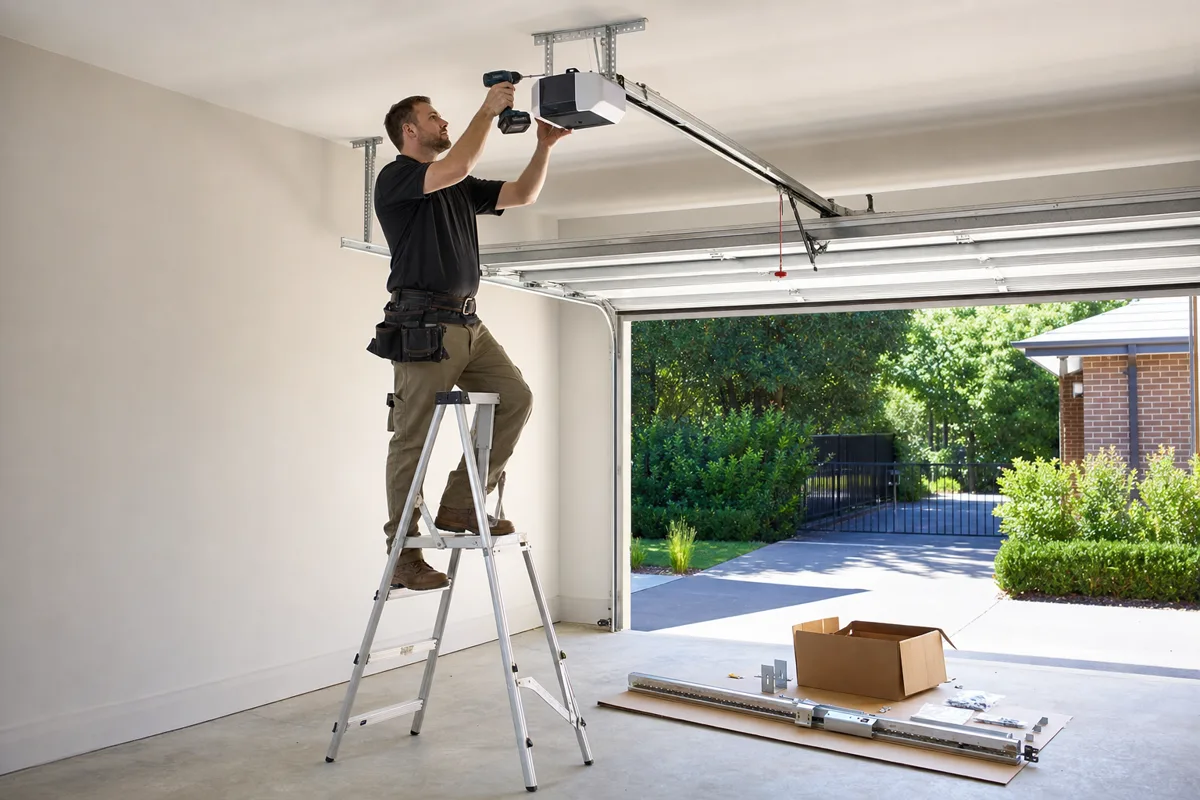
A new opener is an opportunity to get the whole installation right: drive type suited to the garage, correct horsepower or newton rating for the door's weight, solid header and ceiling mounting, sensors positioned properly, and safety functions proven before anyone signs off. Fitting an operator to a door that is out of balance guarantees an early failure, so the door comes first. Request a quote through the online form.
A well-mounted residential operator on a balanced door typically gives around ten to fifteen years of service. Belt drives generally stay quiet longest; chain drives tolerate heavier duty in unheated space. The variables that shorten that span are an undersized unit, a door that is fighting its own weight, and a flexing rail or header bracket. Keeping the door itself in balance is the single most effective way to get full value from a new operator.
Work through the symptom first — some of these turn out to need no technician at all.
Belt drives are the quietest and are worth the difference where there is living space beside or above the garage. Chain drives are robust and economical in a detached or unfinished garage. Wall-mounted jackshaft operators solve low-headroom situations. The right answer depends on the building, not on a default.
A wide insulated two-car door weighs substantially more than a light single, and an undersized operator will run hot, strain and wear out early. Sizing is done from the actual door, not from a rule of thumb about garage size.
The header bracket needs solid structure behind it and the rail needs proper ceiling support, otherwise the whole assembly flexes and the door runs roughly. Available headroom, backroom, obstructions and the position of lights and storage all get measured before installation rather than discovered during it.
Photo-eye sensors, contact reverse, correctly configured travel and force limits, rolling-code remotes and a manual release that actually works are the baseline. Battery backup, keypads, Wi-Fi control and integrated lighting are options that should be chosen deliberately.
A large share of Brampton's newer stock is townhousing, and the City's transit-supportive townhouse guidelines describe typical unit widths of six to six and a half metres, with front-loaded garages occupying up to half of the unit's front face and door widths stepped from 2.5 metres up to 3.7 metres by unit width. These are compact garages, frequently with finished rooms directly above and limited headroom over the door. That combination makes drive noise and mounting quality matter far more than they would in a large detached garage, and it is often where a wall-mounted or belt-driven operator earns its keep.
A new operator does not make a door safe on its own. The photo-eye sensors must be installed and working, contact reverse must be verified against the floor, and force must never be raised to mask mechanical drag. Wiring to a motor head is mains work and should not be improvised. Keep remotes away from children and out of parked vehicles, and test the reverse functions periodically.
Balance, spring condition, roller and track state and section integrity are checked first. Anything that adds resistance is corrected before a new operator is asked to live with it, because the operator will be the part that fails if it is not.
Drive type, capacity, mounting approach and control features are set out against the door and the garage, with the reasoning explained. Headroom and structural details are confirmed on site so there are no surprises on installation day.
The header bracket is fixed to solid structure, the rail is levelled and supported from the ceiling, the door arm is set to the correct geometry, and sensor brackets are mounted at the appropriate height with wiring run and secured tidily.
Travel limits and force are set for the door's weight, contact reverse and photo-eye reverse are tested, remotes and keypads are programmed, and the manual release and re-engagement are demonstrated to the household before the visit ends.
Fault-finding on openers that hum, stall, reverse, or ignore their controls.
View details
Replacement doors measured to the opening, the headroom and the side room.
View details
Balance test, hardware torque, lubrication and a full safety-system check.
View detailsFill out the form and we'll confirm your appointment by email.
Garage Door Opener Installation is available across every Brampton neighbourhood inside the area below.
Map data © Google. Pin shows the service area, not a walk-in location — all work is done at your home.

A real callout, not stock imagery.
A sectional door pulled off its tracks, taken down and supported on site so it could be checked and re-hung safely — photographed on the job.