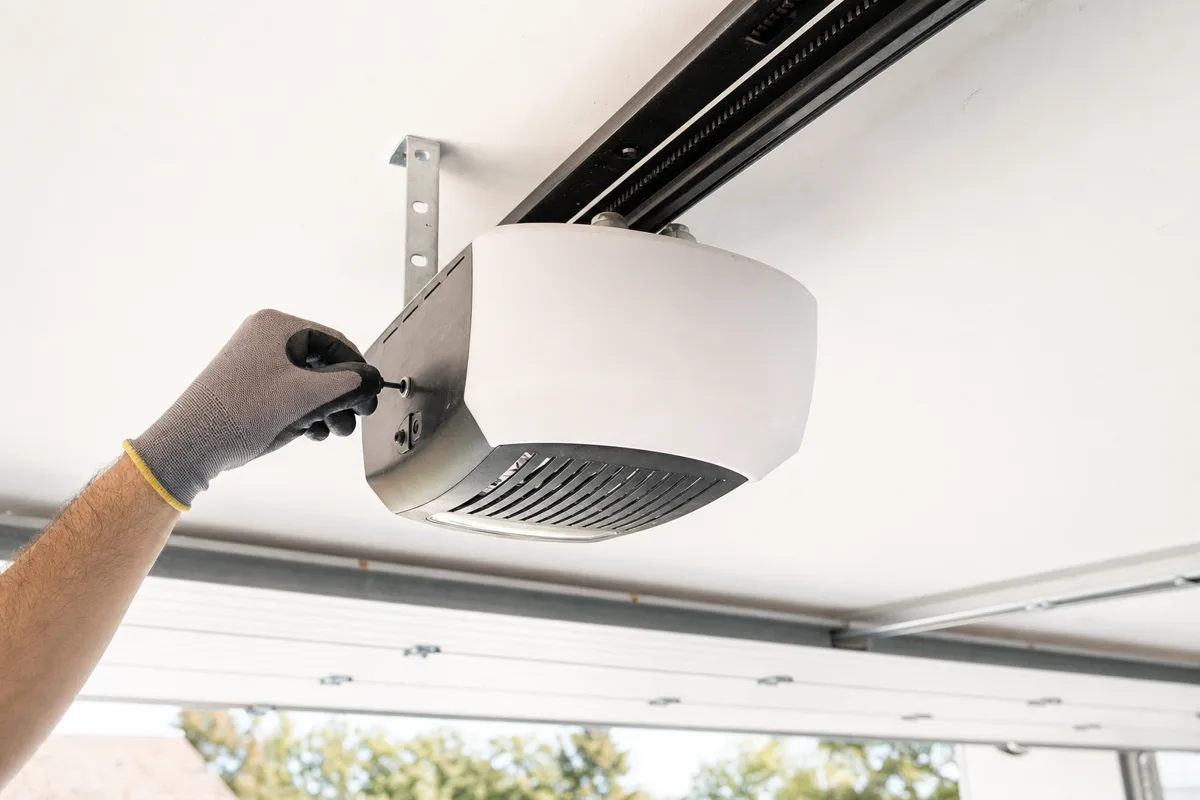

Garage Door Opener Repair
Fault-finding on openers that hum, stall, reverse, or ignore their controls.
View serviceA closing reversal is a safety response until observation proves otherwise. Make the area safe, use one deliberate test at a time, and leave a door with uneven movement alone.
Begin at ground level and work upward: remove anything under the seal, inspect the photo-eye path and their status lights, and consider glare if the failure has a daylight pattern. These checks address the ordinary, low-risk causes of a door that will not close. A door that shudders, changes level, rubs metal, or has a drooping cable is a different situation. Stop operating it and arrange a mechanical assessment through the form. Resistance must be diagnosed, not overpowered with a force-setting change.
Start by treating the doorway as an active hazard rather than a nuisance. Park outside the travel path, move people and animals away from it, and stand where the complete door remains visible. Send only one close command to establish the symptom: does it immediately refuse, travel normally and return, or slow down near the floor? Record the location, sound and shape of the motion rather than repeating the same experiment. Repeated cycles can burden a door that has begun to bind. The wired control can also reveal an important distinction. If automatic closing fails but the door descends only while the wall control is kept pressed, the opener is requiring a person to supervise the close because its safety-beam circuit has not passed. That mode is a warning, not a daily operating method. Before relying on a correction, observe several ordinary closes from clear of the opening.
Start at the top. The early checks are the most common causes and need no tools.
Remove loose objects from the garage entrance and driveway edge, including mats, toys, tools, containers and sports gear. Inspect the full seal line at floor level, especially the corners, for gravel, leaf litter, compacted snow or a raised patch of ice. From outside the opening, make one normal close attempt and note where the bottom section pauses or reverses.
What it means: Result: if removing material lets the door land normally, the floor-level obstruction was the cause.
Find the small safety sensors mounted near the lower track on each side. Use a soft, dry cloth to remove film from both lenses, then compare their indicator lights with the opener's normal state. Check the line between them for a cord, shovel, stored item, web or debris. A visibly crooked bracket is an alignment issue; do not force it while the door operates.
What it means: Result: an unlit, flashing or unstable sensor signal makes the beam path or alignment the leading suspect.
Compare the time and weather when the problem appears. If it occurs only with direct sunshine, use an opaque card held beside the receiving eye to create a small side shade without placing anything between the two sensors or over either lens. Watch the indicator during one observed close from the wired control. Remove the card after the test; tape and covered lenses defeat the photo-eye system rather than repairing it.
What it means: Result: a stable indicator and normal close only under that side shade indicate optical glare rather than a failed door mechanism.
With the doorway visible and clear, try one command at the wired wall control. If the remotes or keypad do nothing while that control works, look in the opener instructions for a lock, vacation or remote-disable mode before assuming the door itself is stuck. If it needs uninterrupted wall-button pressure to descend, release it if anything enters the opening. That behaviour points to an unverified safety signal.
What it means: Result: wall-control-only operation separates a remote-setting problem from an issue detected by the automatic closing safeguards.
With the door fully closed, examine both sides from a distance. Compare the bottom corners, look for a lift cable that lacks tension, and check whether a roller is visibly riding an edge. During one additional observed cycle, listen for grinding or impact and watch for a gap at either track. Do not reseat a roller, tighten a cable or straighten metal; those parts can be carrying substantial load.
What it means: Result: a low corner, loose cable, roller displacement or harsh contact means the door should remain out of service for repair.
End the checks at once if the door moves crookedly, a cable appears loose or frayed, a spring has a visible gap, or the opener strains against the door. Do not pull the door down, slacken track fasteners, alter a spring component, or increase the closing-force adjustment. Springs and lift cables balance a heavy door under tension, while bottom brackets connect that system to the door itself. A force increase can conceal the resistance that should have triggered reversal and can turn a minor fault into injury or property damage. If it is safe to leave the door closed, keep the area clear and use the online form to request an inspection.
Brampton's winter makes both a dirty threshold and a dirty sensor plausible. The Toronto Pearson normal used for the city records a January daily mean of −5.0 °C and average annual snowfall of 114.5 cm, so snow spray, road salt and meltwater can build up at the low-mounted equipment long after a storm. The contrast across the city matters too. In newer places such as Springdale and Northwest Brampton, many narrow-frontage homes place a front garage directly on the street-facing drive; in Mount Pleasant, some garages face rear lanes. Their light and splash exposure differs, so record the time of day and sun direction before blaming the opener. Churchville, the city's heritage conservation district, has narrow tree-lined roads on the Credit River valley sides. Wherever the garage sits, a seasonal check of the floor line and sensor lenses is sensible after a new reversal.
Fill out the form and we'll confirm your appointment by email.
These guides are written for Brampton homes. If the fix is beyond a homeowner check, we work everywhere inside this area.
Map data © Google. Pin shows the service area, not a walk-in location — all work is done at your home.

A real callout, not stock imagery.
A sectional door pulled off its tracks, taken down and supported on site so it could be checked and re-hung safely — photographed on the job.
